
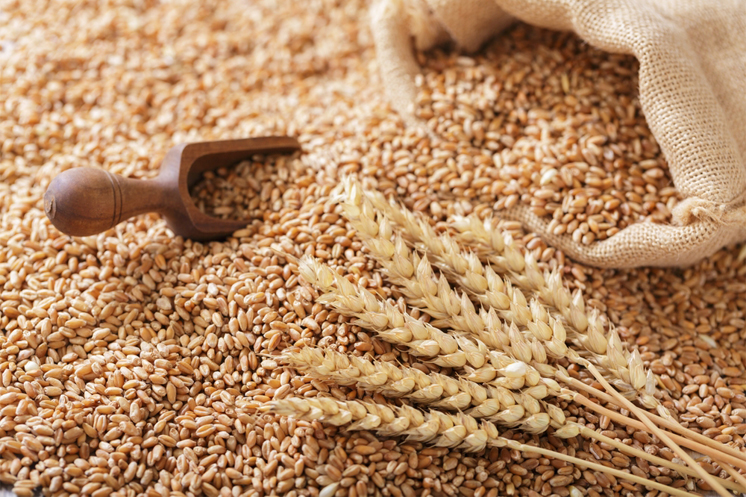
Wheat is one of the world’s most important staple crops, belonging to the grass family (Poaceae) and scientifically classified under the genus Triticum. It has been cultivated for over 10,000 years, originating in the Fertile Crescent of the Middle East, and has played a central role in the development of human civilization by supporting the rise of agrarian societies. Wheat is primarily grown for its edible grain, which is processed into flour and used to make a vast array of food products including bread, pasta, noodles, biscuits, cakes, pastries, and breakfast cereals. The two main types of wheat are Triticum aestivum (common bread wheat) and Triticum durum (used for pasta). Nutritionally, wheat is a rich source of carbohydrates, dietary fiber, plant-based protein, and essential micronutrients such as B vitamins (especially folate, thiamine, and niacin), iron, magnesium, and zinc. Whole wheat retains the bran, germ, and endosperm, offering superior nutritional benefits compared to refined flour, which is often stripped of fiber and nutrients during processing.
Wheat also contains gluten, a group of proteins that gives dough its elasticity and chewy texture, but which can cause health issues for people with celiac disease or gluten sensitivity. As a cool-season crop, wheat is grown in a wide range of climates, with major production concentrated in countries like China, India, Russia, the United States, and France. In India, wheat is the second most important food crop after rice and is predominantly cultivated in northern states such as Uttar Pradesh, Punjab, Haryana, and Madhya Pradesh, especially during the Rabi (winter) season. In addition to its dietary role, wheat by-products are used in animal feed, industrial starch, and even biodegradable plastics. Technological advancements in irrigation, mechanization, and high-yielding varieties have significantly increased wheat production over the decades, especially during the Green Revolution. Today, wheat continues to be a cornerstone of global food security, feeding billions and supporting the agricultural economies of many nations.